Deadpan or Big Reaction: Two Ways to Play a Comic Beat
Deadpan or big reaction changes where an audience looks and when it laughs; learn to choose a delivery, shape the pause and keep the joke clear.
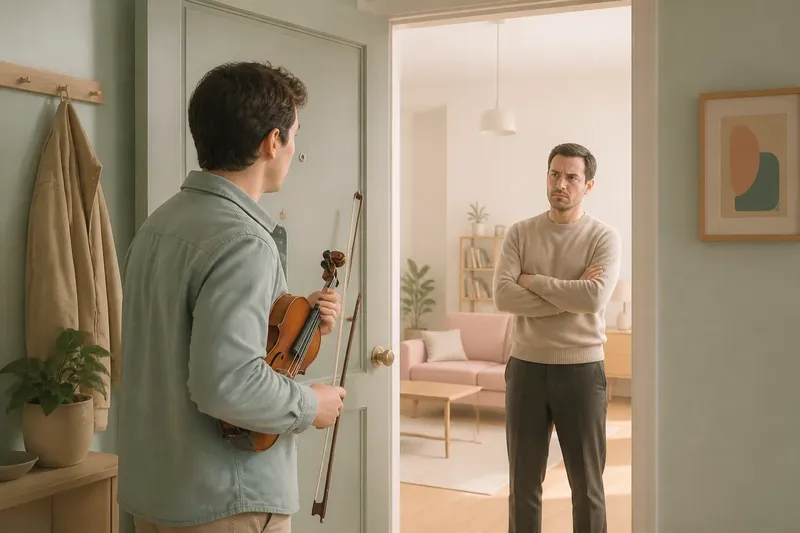
The most common mistake with deadpan or big reaction is choosing the delivery before deciding what the audience should notice. The cost is a comic beat that feels either flat or overplayed, even when the line itself is sound. A restrained face and an expansive response do different jobs: one leaves room for the audience to inspect the moment, while the other directs attention towards the performer’s response.
To choose between them, work from the beat’s purpose, not from a general preference for subtlety or energy. A useful delivery makes the audience look at the right thing, at the right time. It does not need to announce that the moment is funny.
Define the beat
Start by separating the comic beat into three parts: the setup, the turn and the response. The setup establishes what the character expects. The turn changes that expectation. The response shows what the character makes of the change, or how carefully they avoid showing it.
Take a simple invented situation: a character is asked whether they have finished a report and says, “I’ve finished thinking about it.” The turn is the evasive answer. A deadpan performance can make the line sound like a perfectly reasonable administrative update. A big reaction can turn the speaker’s own satisfaction into the main event, perhaps by delivering the sentence with the grave pride of someone announcing a civic triumph.
Before rehearsing, write down the beat’s main source of amusement in a few words: evasion, misplaced confidence, embarrassment, irritation, or something else. If you cannot name it, you may be trying to play a line whose comic action is not yet clear.
Identify what changes, then decide who notices it.
Set the audience’s focus
Deadpan directs attention towards the gap between what is happening and how little the character appears to care. The audience watches the facts, the wording and the stillness around them. Small details become legible: a pause before an answer, a perfectly ordinary gesture continuing through an absurd statement, or a face that refuses to acknowledge the room’s obvious reaction.
Big reaction puts the performer’s response in the foreground. A sudden change in volume, posture, pace or facial expression gives the audience a clear signal that the character has encountered something important. The comedy may come from the size of that response, from its timing, or from its mismatch with a minor event.
Choose one main focus for each beat. If the line is already surprising, an oversized reaction may compete with the turn. If the line is plain on the page, a vivid response may supply the event the audience needs to follow. This is a question of emphasis, not a rule that one method belongs to one kind of joke.
Ask what the audience should be watching, not merely how loudly it should laugh.
Choose a delivery
Test the beat once in each mode. Keep the words and basic timing the same so that you are comparing delivery rather than quietly rewriting the joke.
For the deadpan pass, reduce visible commentary. Let the voice stay close to the character’s ordinary speaking level. Keep the face available but not explanatory; a blank mask can be as distracting as a wink if it looks like a deliberate display of blankness. Give the audience enough time to hear the line and notice its implication.
For the expansive pass, choose a specific change rather than turning every dial at once. The character might become ceremonially formal, recoil from an insult, or treat a minor inconvenience as a personal catastrophe. A defined response is easier to read than a general burst of noise. The body, voice and face need not all reach the same intensity.
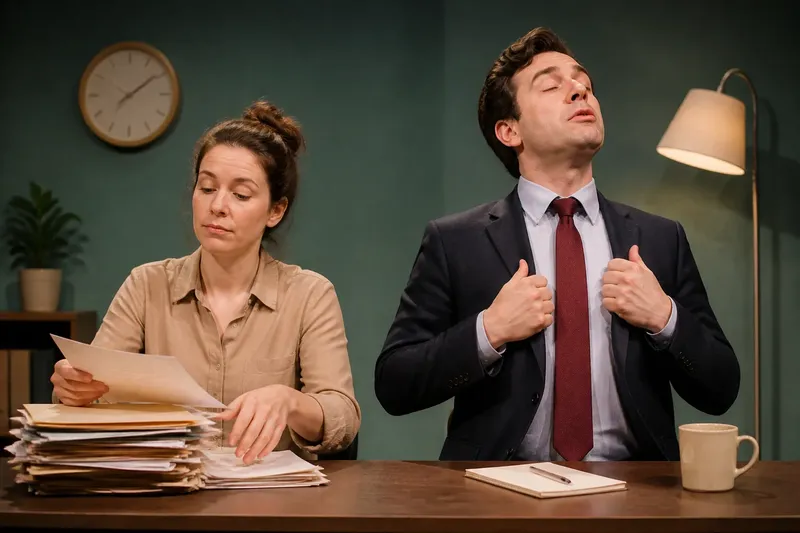
Say you are rehearsing the unfinished-report line with a partner. In an invented version, you deliver it deadpan while continuing to sort a stack of papers; the expected observable result is that attention stays on the evasive wording and the contrast with the routine task. In another invented version, you stop sorting, straighten your jacket and deliver the same sentence like a formal announcement; the expected observable result is that the character’s inflated self-importance becomes the main focus. Neither choice is inherently funnier. They make different parts of the same beat visible.
Keep the version that clarifies the comic action, rather than the one that merely feels more energetic.
Shape the timing
Timing is not simply a pause placed before a punchline. It is the arrangement of attention around the turn. In deadpan, a pause can let the audience recognise that the character has chosen not to react. In an expansive performance, a pause can gather expectation before the reaction arrives, or let the reaction itself land before the next line.
Mark the beat in your script with simple cues: hold, turn, answer, or move on. These are rehearsal reminders, not instructions to freeze for a fixed count. The useful length depends on the room, the scene’s pace and whether the audience needs time to understand the turn.
Try the beat with no extra pause, then let the turn breathe slightly longer. Notice whether the audience would have time to process the change without the scene losing its forward motion. If the pause makes the character look as though they are waiting for approval, shorten it or give them a clear task to continue.
A pause should change what the audience can notice.
Keep character in charge
A reaction belongs to a character, not to the performer’s wish to underline a joke. Ask what the character believes is happening, what they want from the other person, and what they are trying to conceal. Those answers give both restrained and expansive delivery a reason to exist.
A character may stay calm because they are proud, distracted, socially cautious or determined not to lose control. Another may overreact because they feel exposed, want attention or mistake a small slight for a major betrayal. The visible size of the response does not tell you, by itself, what the character is feeling. Choose a playable intention and let the delivery follow it.
This also prevents deadpan from becoming mere stillness. A performer can remain physically quiet while pursuing a clear objective: avoiding a question, holding a position or pretending not to understand. The audience can sense the effort beneath the calm. Likewise, an expansive response can remain specific if it grows from a real want rather than from a generic instruction to be bigger.
Give the character something to do besides demonstrate a style.
Use the room’s response
In rehearsal or performance, listen for what the audience reacts to. A laugh after the line may suggest that the wording carried the turn. A laugh on the pause may suggest that the audience is reading the character’s restraint. A laugh at the movement may show that the physical response has become the main event.
Do not treat any one response as a verdict on the whole performance. A laugh can arrive late, overlap a following line or be absent while the audience still follows the beat. Look for a practical pattern: does the delivery help people understand the turn, or does it obscure the next action? Does the pause leave space for recognition, or stall the scene? Does the reaction reveal character, or replace the joke with display?
When working with a director or scene partner, describe the effect you want in plain terms. “Let them notice the evasion” is more useful than “make it drier”. “Let the indignation take over the room” gives a playable direction without prescribing a theatrical flourish. These descriptions can lead to different choices while keeping the beat’s purpose in view.
Questions of delivery?
When does deadpan suit a line?
Deadpan can suit a line when the contrast between the situation and the character’s calm response carries the amusement. It is especially useful if the audience needs to attend to wording, implication or a character’s refusal to acknowledge what is obvious.
When should a reaction grow?
Let a reaction grow when the character’s response is itself part of the comic event. Give the change a clear cause, such as wounded pride or sudden alarm, rather than increasing volume and movement without a reason.
Can a scene mix both styles?
Yes, provided the shift belongs to the character or the changing beat. A calm line followed by an unexpectedly large response can create contrast, while an expressive moment followed by sudden composure can redirect attention to what the character is trying to hide.
How do I avoid playing for the laugh?
Focus on the character’s intention and the next action, not on asking the audience to approve the joke. If a gesture or pause feels like a signal that laughter is due, connect it to something the character wants or remove it.
Make a final pass
Before settling on a delivery, run the scene at its intended pace. Check that the setup remains clear, the turn is audible or visible, and the response does not cover the next useful line. A comic beat is part of a scene, so a laugh that leaves the following moment stranded may be an expensive flourish.
Then make one deliberate adjustment at a time: soften the voice, reduce a gesture, hold the pause, or let the reaction expand. If you alter several elements together, it becomes harder to tell what changed the audience’s focus. Keep notes in terms of observable actions rather than labels such as “more funny” or “less funny”.
Deadpan or big reaction is a choice about attention, not a ranking of comic talent. The most useful delivery is the one that lets the audience catch the turn, understand the character’s response and stay with the scene after the laugh. Choose the emphasis that serves this beat, then leave room for the next one.